Many clients simply say they want smooth walls. In reality, that sentence can mean different finish levels, different working time and a different final result.
A wall is prepared differently for wallpaper, standard painting, strong side light, LED strips, dark paint or a minimalist premium interior.
The key point: the finish level should be chosen according to light, paint, substrate condition and the expected effect. The word"smooth" alone does not define the scope.
Why does light matter so much?
Imperfections often appear in the evening, with wall lights, LED strips or a lamp placed close to the wall. Side light reveals waves, joints, scratches and sanding marks that may be almost invisible during the day.
Q2 - basic preparation
Q2 is a practical basic level. It can work under some wallpapers, decorative textures or technical rooms, but it is not an ideal smooth wall for demanding painting.
Q3 - the sensible standard for many apartments
Q3 is often a good choice for living rooms, bedrooms, corridors and home offices. It gives a better base than basic preparation and usually balances cost, time and quality well.
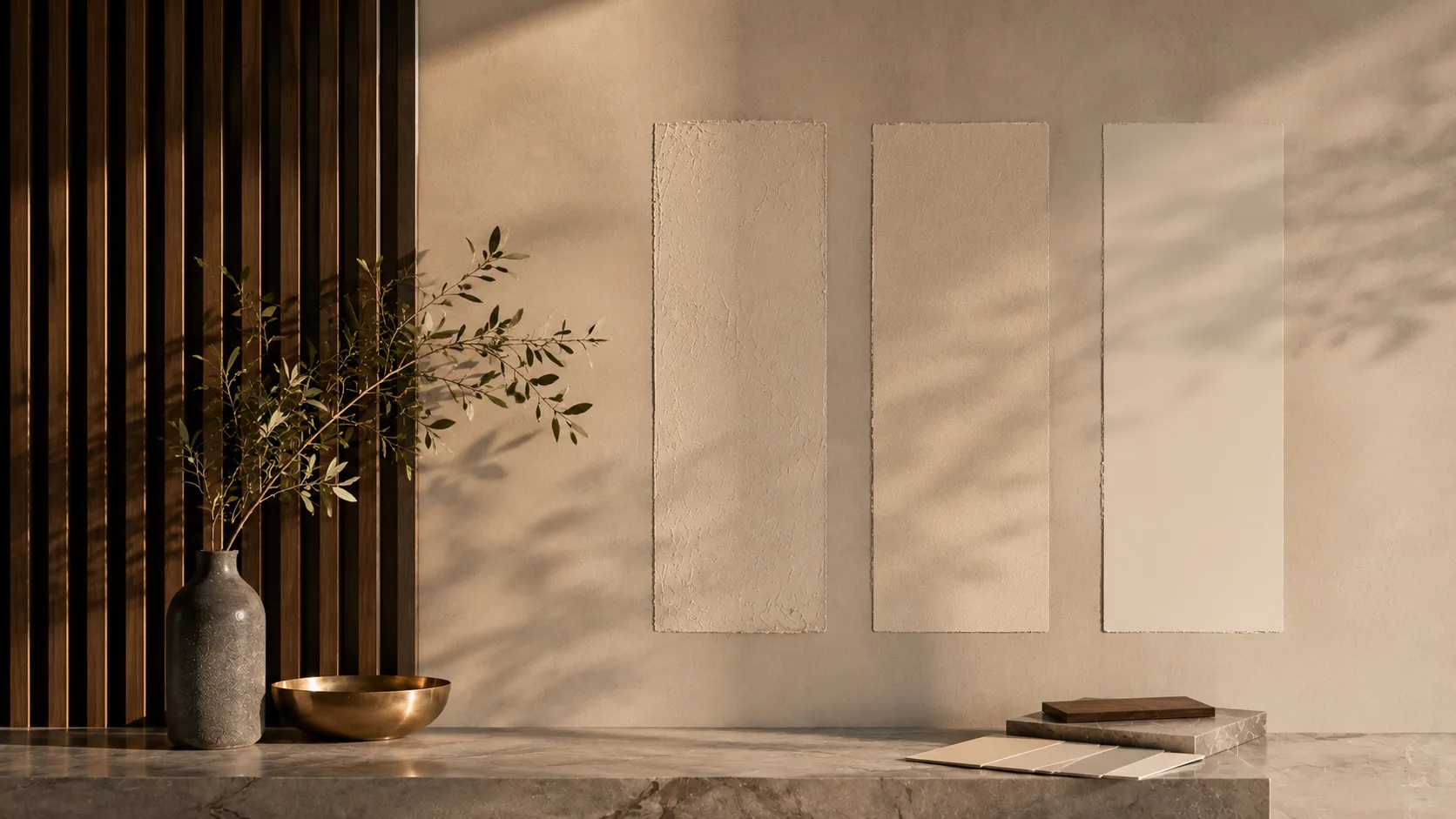
Q4 - for demanding visual conditions
Q4 is worth considering for large exposed surfaces, LED lighting, dark colours, satin paint and interiors where calm, elegant wall planes are part of the premium effect. It costs more because it requires more preparation, sanding and control.
Is Q4 always worth it?
No. In many rooms, a well-executed Q3 level is enough. Q4 makes sense where the wall will actually be exposed and where the lighting, colour or design standard requires it.
Ask before accepting a quote
- Which wall finish level is included?
- Will the wall be inspected under side light?
- Does the chosen paint require a better substrate?
- What is included in sanding, priming and corrections?
- Where is Q4 justified and where is Q3 enough?