Partner Program
for Property Managers
A property manager does not need another random crew, but a partner who can quickly restore a unit, common area or selected scope of work to order and readiness.
We handle rotation units, common areas, refreshes, renovations and finishing in a model that organises decisions, communication and documentation.
Post-tenant units, investment apartments, staircases, corridors, smaller upgrades and the My Mivare panel.
Faster response. More predictability. One organised cooperation model.
A program built around continuity of property operation
What the property manager gains
We do not build this program around decorative extras and random services.
We build it around topics that genuinely recur in a property manager's work: post-tenant units, quick refreshes, repairs after requests, common areas and larger works that need to be taken over without dispersed responsibility.
Response time, communication order, documentation and a predictable result matter, not adding more chaos to an already demanding daily reality.
Faster response
Instead of looking for contractors separately for every issue, the property manager gets one organised entry point for refreshes, renovations and finishing.
Readiness of units and zones
The program helps return spaces to usable standard faster, both in residential units and selected common areas.
Operational order
Photos, scopes, stages and arrangements are handled clearly without scattering the matter across calls, emails and messengers.
A predictable model
We do not promise everything to everyone. We agree the scope, priorities and rhythm of cooperation so the program can genuinely be implemented.
Who we created this program for
Where this model makes the most sense
This is not a program for large facility management structures or developments with their own extensive execution teams.
It works best where speed, finishing aesthetics and organisational order need to be combined without building an entire internal delivery department.
Building and estate managers
Where issues with common areas, units after requests, refreshes and works that need to be managed without operational chaos keep returning.
Rotation units
Apartments after tenancy, after handover, after minor damage or requiring quick organisation before the next use stage.
Communities and smaller cooperatives
Especially where there are no in-house crews and a partner is needed to take over a clearly defined scope without blurring responsibility.
Portfolio investors
For owners of several units who want one standard for managing works and one partner for finishing, renovation and organisation topics.
Three main program areas
Units, common areas and larger work scopes
A property manager usually does not need ten random options.
They need a few clear variants that can be quickly matched to the situation and handled in a predictable operating model.
a variant for apartments that need to be quickly restored to order and readiness
Rotation Unit Package
We created this variant for units that do not need a full, showpiece transformation but must return to standard quickly, cleanly and through a predictable process. What matters here is pace, durability of solutions, a sensible work scope and readiness for the next rental, sale or further use.
The standard scope may include refreshing walls, floor corrections, minor electrical and plumbing works, lighting improvements, bathroom works, replacement of selected equipment and preparation of the unit for handover.
Minimum unnecessary decisions. Maximum readiness for the next step.

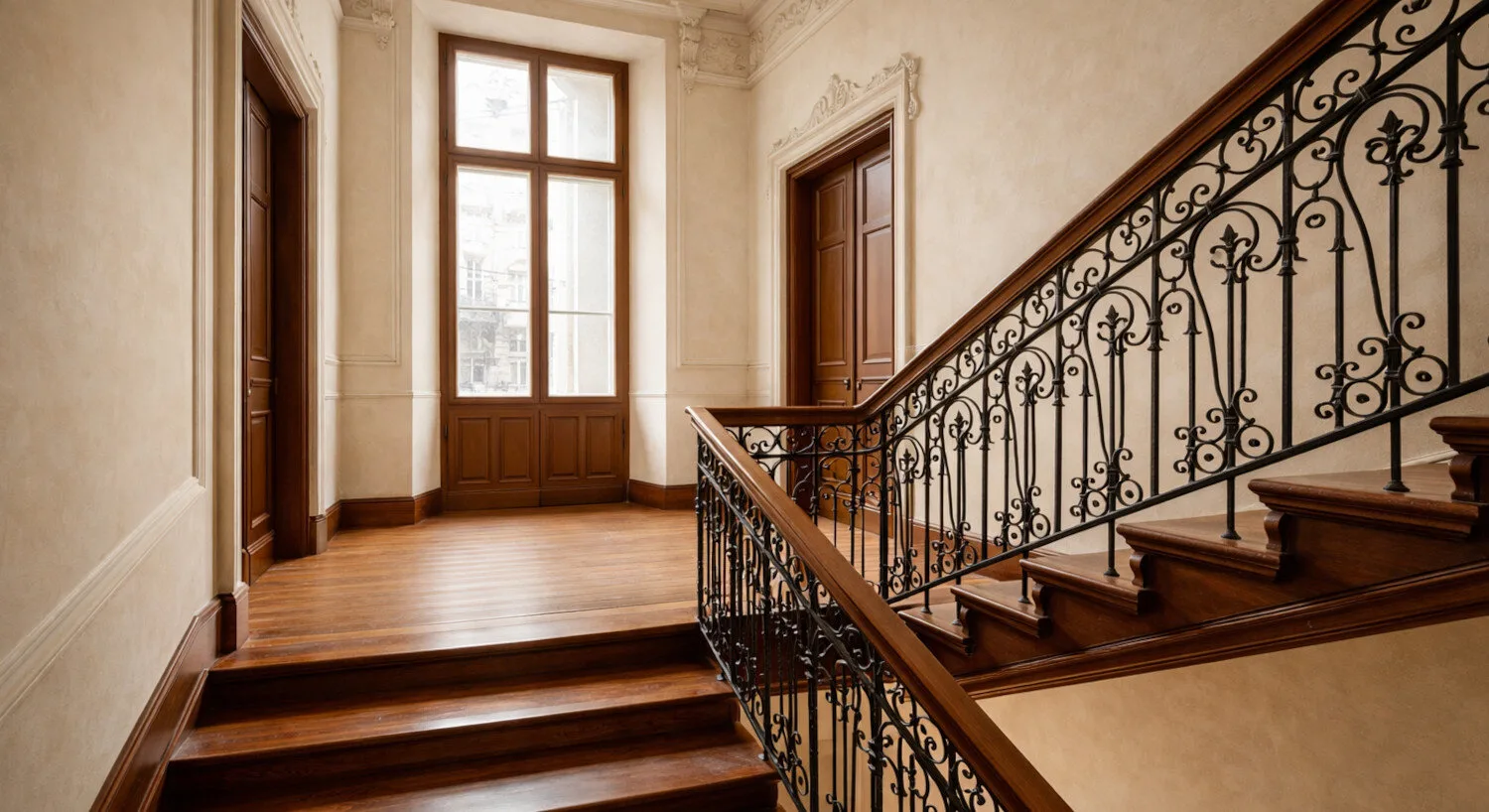
a variant for staircases, corridors, entrances and other zones that influence how the building is perceived
Common Areas Package
This model is for properties where not only technical efficiency matters, but also how residents, owners and guests perceive the space every day. We work where a well-managed refresh or renovation can genuinely improve comfort and first impression without entering an unnecessarily expanded scope.
The scope may include walls, ceilings, floors, lighting, selected joinery elements, entrance zones, small upgrades and aesthetic organisation of usable space.
Better perception of the building. More order. Less improvisation in managing the works.
Larger scopes, priorities and operating order
Upgrades, service modes and documentation
The program does not end with quick unit refreshes and works in common areas.
Larger scopes, response priorities and the way requests are handled are equally important, so the property manager does not have to build the process from scratch every time.
Targeted upgrades
Empty units, larger refreshes, selected rebuilds and renovations that go beyond standard service response but still require an organised operating model.
Standard and priority mode
Not every issue requires the same pace. From the start, it can be agreed which requests are standard and which must be handled faster through a priority path.
Photos and change history
Before condition, intermediate stages, final result and organised action history make it easier to return to issues and justify decisions.
Scopes and approvals
This is not meant to be a set of loose arrangements. The scope of work, sequence of actions and key decisions should be clear to all sides from the beginning.
Clear division of responsibility
How the cooperation model works
We do not show full commercial terms or all organisational scenarios online, because the model depends on the type of property, portfolio scale and how the property manager works today.
We do show a stable cooperation framework that organises responsibility from request and inspection to delivery and closure.
On Mivare's side
- Analysis of the request, unit or common scope and selection of the best model, from quick refresh to broader renovation or finishing.
- Coordination of works, materials, schedule, photos, stages and handovers within the agreed scope, without shifting daily supervision onto the property manager.
- Managing statuses, documentation, arrangements and action history in the My Mivare panel.
- Signalling discrepancies, risks and decisions requiring approval before the matter becomes an operational problem.
- Delivery of the agreed operating mode, standard or priority, according to the previously agreed cooperation rules.
On the property manager's side
- Indicating the property, unit or request for which the program genuinely makes sense, instead of putting every issue into one bucket.
- Providing key information about the building standard, issue priority, way of use and expected response level.
- Approval of important scope and budget decisions at points previously agreed as requiring the property manager's involvement.
- Overall control through statuses, photos, documents and action history, without manually stitching the process across different channels.
- Maintaining the relationship with the resident, owner or community in the agreed model while Mivare handles the execution and operational part.
Operational support for the program
My Mivare
A property manager should not have to supervise units, common areas and work stages through emails, calls, random messenger photos and scattered files.
That is why we bring the whole process together in one place, so the team has order, current information and action history instead of another layer of chaos.
Photos and stages
Condition before works, progress, final result and all key moments in one place, without guessing what happened along the way.
Statuses and schedule
It is clear what has started, what has been done, what awaits a decision and which matters require more attention from the property manager.
Documents and scopes
Work scope, arrangements, photos, files and summaries are kept in a clear order, making it easier to return to the matter later.
One communication path
It is a space where it is easier to connect the property manager, owner, community and contractor without scattered responsibility and information chaos.
Apartment in a block
a small space that started making a first impression
This project was not about a showpiece living room, but about the space everyone sees immediately after entering. The hallway gained order, rhythm and calm elegance. Built-ins, light and refined transitions started to work for the perception of the whole apartment.
This is a good example that a big difference does not always require a large area. Sometimes it is enough to handle well a place that had previously been neglected.
Let us review one building, unit or work scope
You do not need to have a ready cooperation model or a full program for all properties at the first conversation.
One specific topic is enough: a post-tenant unit, staircase, common area, investment apartment or work scope that keeps returning and currently creates too much chaos.
We will show where a simple refresh makes sense, where a broader renovation is needed and where it is best to build a permanent cooperation model.
This should be a partnership that genuinely relieves the property manager and brings order to property operations.
Good cooperation starts with the right fit
What else is worth checking
Every partner has a different workflow, clients and responsibility.
That is why we keep the key B2B cooperation paths in one place.
Choose the area closest to your projects and see how we can join the process.
For Architects
A contractor who understands design
We deliver design concepts with attention to detail, communication and execution quality, so the author of the project can protect the final effect.
Partner Programmes
One cooperation hub for partners
See how Mivare can support architects, developers, real estate agencies, property managers and technical partners in client projects.
For Developers
Finishing that helps sell
We support residential investments with finishing packages, show units and reliable execution that raises the standard of the offer.